The Last Salute
A year ago, I put on my country’s uniform for the final time.

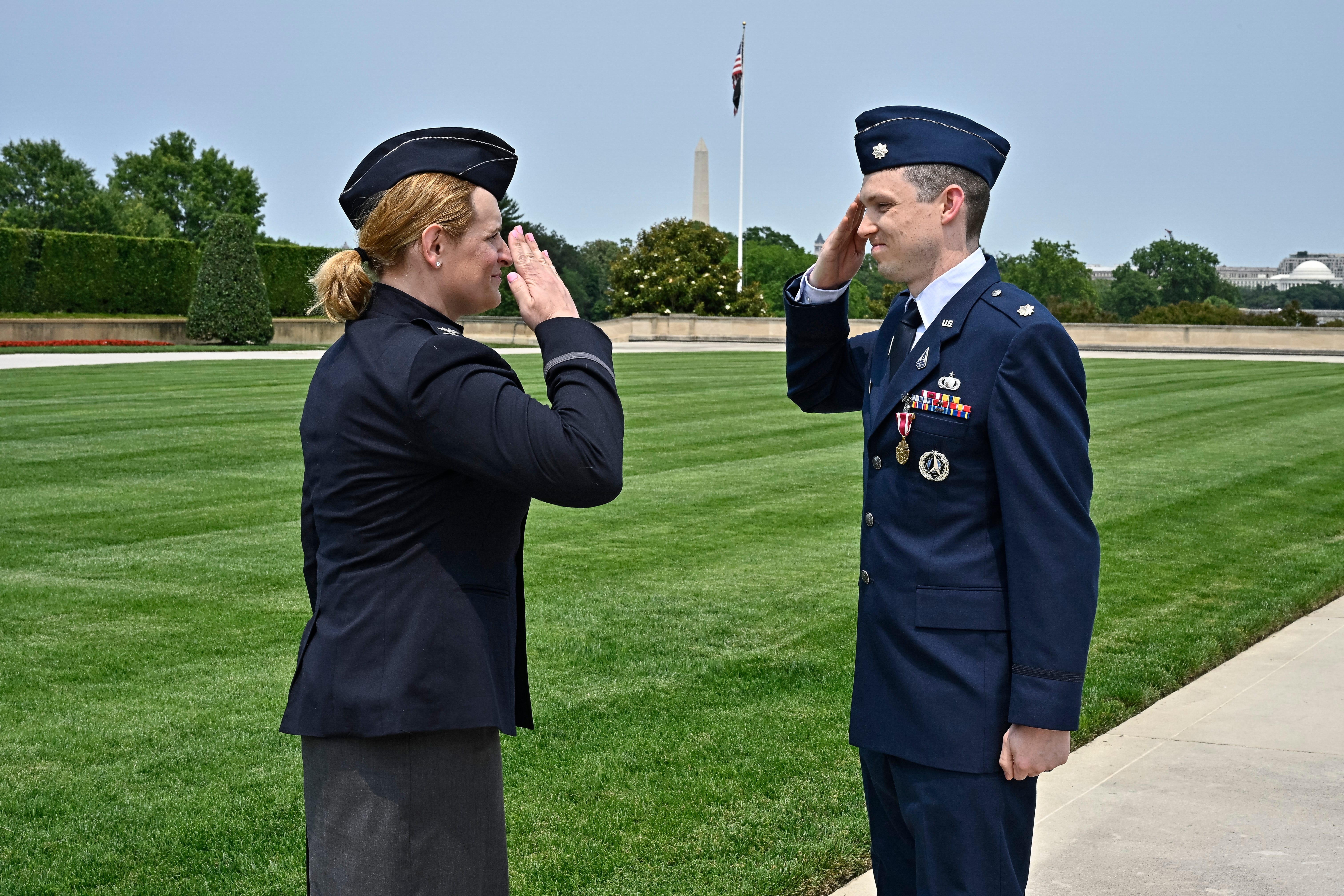
I keep coming back to the boots.
For more than two decades, they sat by the side of my bed, waiting for the next morning when I’d lace them up and go do work I loved. On the night of June 3rd last year, I stood in my bedroom and couldn’t make myself move them. They looked like they were just waiting for all the tomorrows to come. Eventually, I slid them into the corner, not sure what else to do with a thing that had been part of me for more than twenty-two years.
June 4th, 2025 was my last day in uniform and it would be heels, not boots.
I wasn’t ready to be done
I didn’t leave because I’d run out of mission, or drive, or anything left to give. I was forced to leave because an executive order decided that people like me, transgender service members, no longer met this administration’s standard for “military excellence and readiness.” According to President Trump, we were dishonorable, undisciplined liars, who lacked the humility required for military service.
The dissonance of the arguments against our service still infuriates me. In my final weeks, I helped pull off a worldwide requirements summit we’d spent six months building, got a year-long policy effort across the finish line, and opened my inbox one morning to my final performance report.
It was full of phrases like war-winning and driving the future of the force. I was told I was phenomenal, that I should be selected for command. All of it on the record, all of it arriving in the same month my government decided I was unfit to wear the uniform at all.
Many other transgender service members were even then performing their missions at the peak of their abilities. One that sticks with me is TSgt Jack Rousch, who just a few weeks later worked right up to takeoff of the B-2 Bombers on their way to Iran, making sure multiple jets were “green across the board” and mission-ready. And yet, to those celebrating that mission, his contribution as a transgender man was worse than invisible. His own commanders had kept him in the job as long as they could — because there was no one else who could do what he did.
When he finally had to go, Jack said, “This unit has become a second family to me. Being forced to walk away from it is breaking my heart.”
If you’re looking for the logic, stop.
There isn’t any. It’s animus through and through.
There was only the decision, and the clock ticking down to zero.
The long goodbye
In May, after the Supreme Court allowed the ban to take effect, I started wearing a small velcro heart in pride colors, tucked away under my unit patch. For weeks, people stopped me in Pentagon hallways, folks I often didn’t know, to shake my hand, ask for a hug, or just say the words I needed most: I see you. I love you. Keep fighting.
For the encounters that mattered most, I’d peel the heart off my shoulder and ask them to carry it with them in their service.
There was no shortage of tears in those hallways.
One moment will stay with me forever. In my last meeting with the Joint Staff requirements team, I sat at the end of a long table surrounded by admirals and generals. As it wound down, the general in charge went around the room. He got to me last.
“Okay — what’cha got, Space Force?”
I gave one work update, then said this would be my last meeting. An Air Force officer beside me asked, cheerfully, if I’d gotten a new assignment.
I took a breath.
“No. I don’t meet this administration’s standards for military excellence and readiness.”
It took a few heartbeats to land.
Then the room stood.
One by one, the senior officers walked over, shook my hand, and said, “It’s been an honor to have served with you.”
I made it into the hallway before the dam broke. And here’s the most important thing: I wasn’t sad in that moment. I was grateful, and clarity washed over me.
We had won.
This was the culture I had spent a career fighting for. The true unit cohesion that allowed teams to accomplish more than the sum of their parts ever could. The people I served beside knew exactly what transgender people brought to their teams. They didn’t want us gone. In the long run, the truth of that is undeniable.
In the near term, it couldn’t save us.
Choosing the smile
On my last day, I drove in early, parked half a mile out, and walked into the Pentagon one final time. I sat down in my windowless little office, scanned the farewell letter I’d written to every colonel and general in the Space Force, let out a long breath, and hit send.
I couldn’t bring myself to read the replies.
A year later, I still can’t without tears.
Then I went to take one last official portrait: dress uniform, every decoration, flag behind me. At the photo studio, the photographer started to say, “I know who you are and I just wanted…”
I held up a hand.
“Afterwards, please,” I said. “I want to get through this first.”
He nodded.
He fussed over the uniform and took the photos.
When I reviewed the shots, I had two very different versions of myself to choose from.
One was serious, composed, carrying the weight of the office I’d held.
The other was warm, open, with the hint of a smile that says you are welcome here, and we can do hard things together.
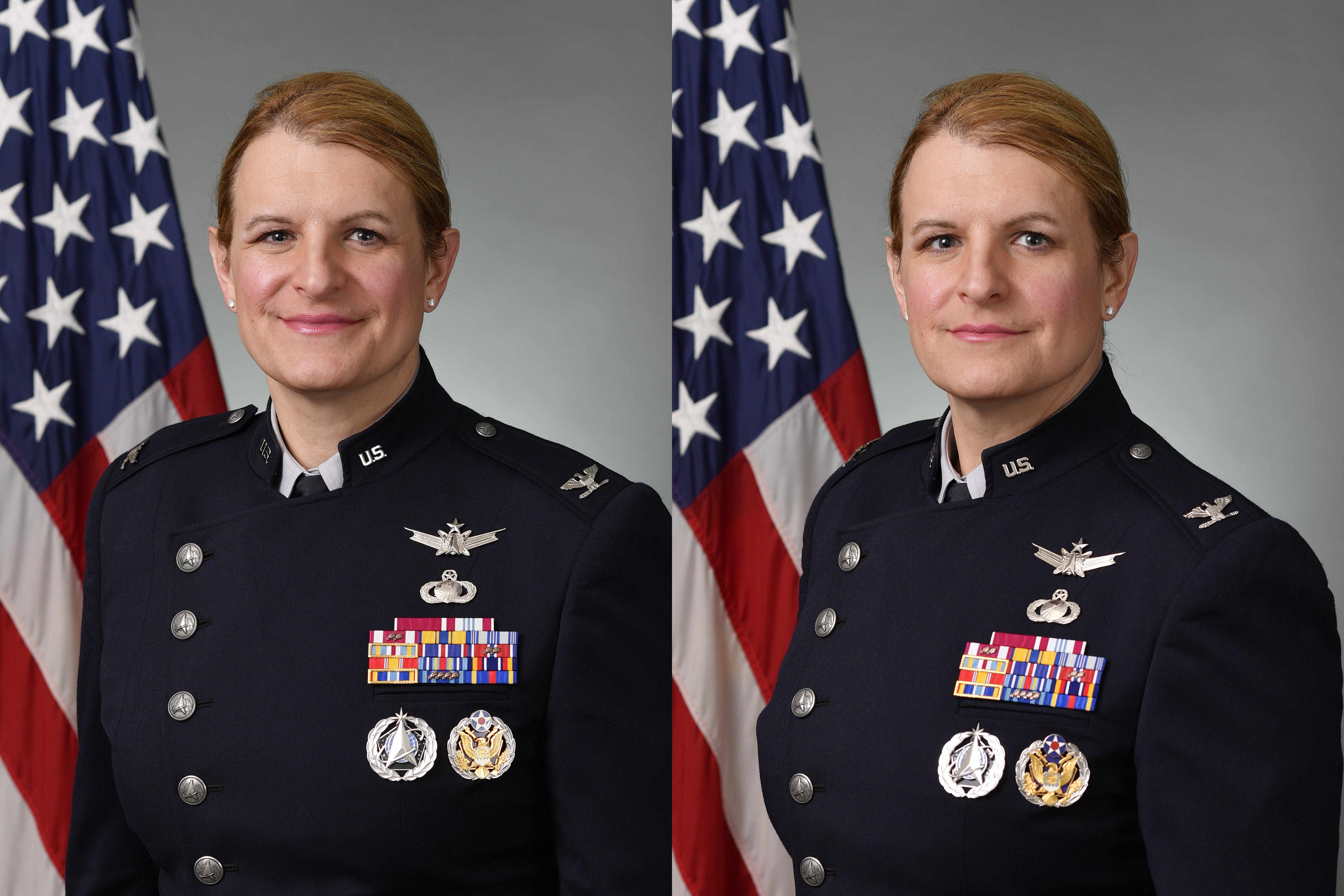
I could still be the badass in the serious photo. I knew I was.
But I asked myself which picture was the summation of my career. It was the smile.
That’s how I want to be remembered.
Right after the picture, my wife arrived and my team gathered on the parade ground just outside Secretary Hegseth’s office. I had set up a small ceremony to pin medals on three of my officers who were departing for new assignments as my final act.
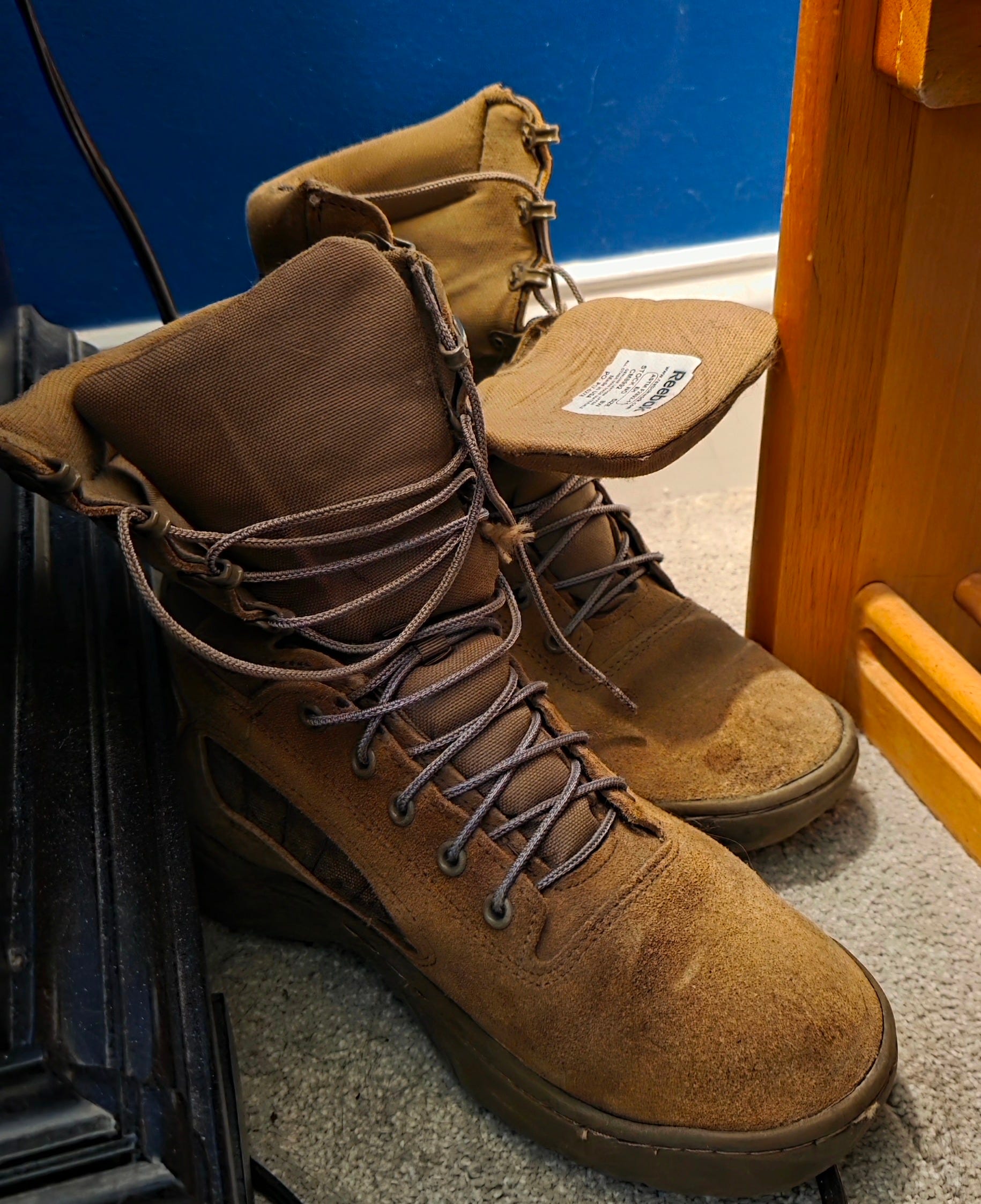
After I pinned on his Meritorious Service Medal, Lieutenant Colonel Small saluted me and I returned it. I knew it was the last salute I would ever receive in uniform, more than twenty-two years after my grandfather gave me my first.
My heart shattered into an infinity of lost possibilities. If the ceremony had ended there, my duty complete, my people taken care of, it would have been enough.
Then my team turned it around on me.
A signed poster. A shadow box of my career laid out in the shape of the Space Force delta. A plaque. A speech.
I laughed. I breathed.
And when Colonel Morris, who I shared an office with, came up to close it out, I let go completely and just cried into his shoulder.
I walked over to the crowd and held my wife for a moment.
And then it was over.
It had taken less than twenty-five minutes.
Less than twenty-five minutes to close more than twenty-two years.
We drove away, and I didn’t look for the Pentagon in the rearview.
One year later
A year on, I can tell you what I did with the grief: I refused to let it be the end.
Within months, I launched a campaign for Congress, because being told I didn’t meet someone’s standard for service only sharpened my conviction that service was exactly what I owed my neighbors and my country.
The trail was, against all odds, a joy. Thousands of conversations. People who saw their own fights in mine. People worried about whether they could afford to stay in the communities they loved. People afraid of a government that felt like it was working against them instead of for them. People trying to protect their families, their rights, and their futures.
Last month, I stepped back from that race when Virginia’s maps were redrawn out from under the campaign. Again, it wasn’t the ending I wanted.
But I’ve gotten good, this year, at endings that close chapters, not the story.
The fight doesn’t end, it just finds another path.
I still have a stack of Space Force patches in my closet. In my final two weeks, I wore a different one each day, peeled it off at night, and labeled it. I’m holding onto them for the day service reopens to everyone — so I can send one to each new Guardian who picks up what we were forced to put down, with a letter telling them how proud I am of them.
That day is coming.
I’m certain of it.
Until then, I think about the boots I moved into the corner. They’re still there, staring at me, just shoved a bit further back. I think about the heart patches I handed to others. I hope they’re being worn with pride. I think about the salute I returned for the last time. It was an honor.
I think about the smile I chose in that final photo, and the promise it was meant to carry:
You are welcome here, and we can do hard things together.
One year out of the uniform, that’s the only standard I’m trying to meet.
— Bree
Bree, thank you for sharing this with such transparency and vulnerability. Your story is heartbreaking - not only because of what was taken from you, but because your pride, purpose, and devotion to service are so unmistakable throughout every word. To have that career and calling ripped away simply for being who you are is cruel and unjust.
But what stays with me most is the hope. In the face of adversity, grief, and persecution, you have not shrunk. You have continued to lead with clarity, dignity, and an indomitable spirit. In a time when so many people feel despair, your conviction that the fight can find another path is deeply inspiring.
We can’t give up. Thank you for your service, your leadership, and the example you continue to set.
This is the most poignant and beautiful post on social media that I’ve read in months.
Thank you for your service, soldier, and I hope you soon get the chance to serve and leading ur nation.